

Skip Bin vs. Trailer: Which is Cheaper & Better for Your Project?
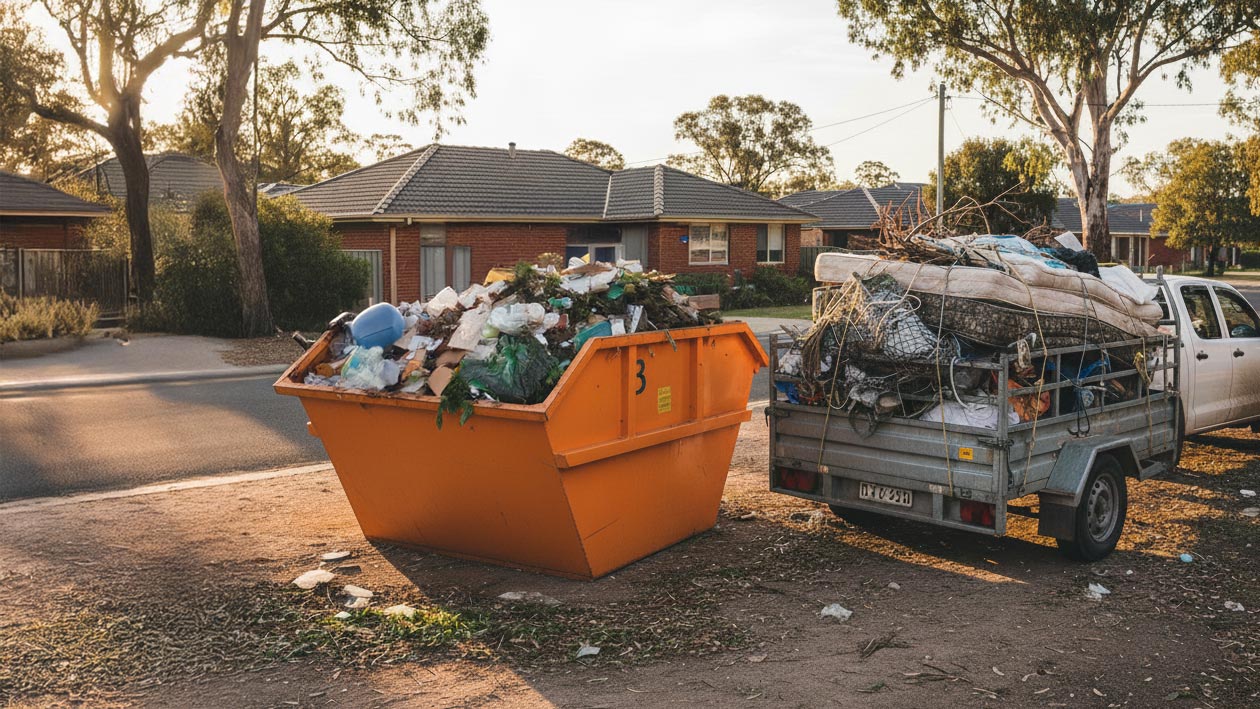
For large volumes of heavy waste from multi-day projects like renovations and home cleanups, a skip bin is the more convenient and cost-effective option. For smaller (under 2 cubic metres), single-day clear-outs where you can transport the waste yourself, a trailer is often cheaper but does require a much larger time commitment and as the old saying goes, time equals money. The right choice depends on your waste type, project duration, and budget. This guide provides a framework to help you decide in under 5 minutes.
Is Hiring a Skip Bin or Using Your Own Trailer Cheaper?
A trailer can be cheaper for a single trip with less than 1 cubic metres of light waste. A skip bin becomes more economical for larger volumes of 2 cubic metres or more, heavy materials like concrete or soil, and projects spanning multiple days, as it eliminates multiple trips and saves you significant time and labour.
| Cost Factor | Skip Bin | Your Trailer |
|---|---|---|
| Hire/Base Fee | Quote from company: $_____ | $0 (if you own it) |
| Waste Disposal Fees | Included in hire fee | Tip fee per trip: $_____ |
| Number of Trips | 1 (delivery/pickup) | Your estimate: _____ |
| Fuel Costs | Included | (Distance to tip × 2) × Fuel price: $_____ |
| Your Time & Labour | Minimal (load once) | Hours spent driving & unloading: _____ hrs |
| Hidden Costs | Council Permit Fee (if on public land): $_____ | N/A |
| TOTAL ESTIMATED COST | $_____ | $_____ |
When to Choose Each Option
Choose a Trailer If:
- You have less than 1 cubic metres of waste
- It’s a one-day project (like a garden tidy-up)
- You have easy access to a local tip
- You’re willing to do the driving and unloading yourself
Choose a Skip Bin If:
- You have over 1 cubic metres of waste
- You’re dealing with heavy materials (branches, bricks)
- It’s a multi-day project (clean ups, renovations)
- You want to maximise convenience and save labour time
What’s Better: A Skip Bin or a Trailer?
Better” depends on your priority. A skip bin is better for convenience, time saving and handling large, heavy loads. A trailer is better when you have plenty of spare time and potentially lower costs on very small jobs. The key is matching the tool to the size and type of your project.
| Feature | Skip Bin | Trailer |
|---|---|---|
| Capacity | 2m³ to 30m³+ | Typically 0.5m³ to 1.5m³ (standard 6×4) |
| Best for Waste Type | Heavy, bulky items (concrete, soil, renovation debris) | Light to medium waste (green waste, old furniture, general junk) |
| Convenience | High: Delivered and removed for you. Load at your leisure | Low: Requires your own vehicle, multiple trips, physical unloading |
| Time Efficiency | High: Load once over several days. No travel time | Low: Time spent on multiple round trips to the tip |
| Cost Structure | All-inclusive fee (hire, delivery, disposal) | Pay-per-trip (fuel, tip fees, your time) |
| Space Required | Needs dedicated driveway or nature strip space | Requires standard parking space |
| Flexibility | Fixed hire period (e.g., 7 days) | Use anytime you want |
Self-Assessment Tool
Consider these factors for your project:
- My project will last more than one day → Skip Bin
- I have heavy materials like bricks or dirt → Skip Bin
- I have more waste than would fit in a car boot 2 times over → Skip Bin
- My priority is saving time and physical effort → Skip Bin
- I have a small amount of green waste to remove today → Trailer
- I live very close to the local tip and am aware of their fees → Trailer
The Benefits and Disadvantages of Skip Bins
A skip bin is a large, open-topped waste container delivered to your location for a set period. Its main benefit is the convenience of handling large waste volumes on-site. However, the cost of hiring a skip bin in Sydney and space requirements can be disadvantages for very small jobs or properties with limited access.
Key Benefits
- Saves Time: Eliminates multiple trips to the tip
- Handles Heavy Waste: Engineered for construction, demolition debris and heavy household waste
- Improves Safety: Keeps hazardous waste contained in one area on a worksite
- Environmentally Responsible: Reputable companies sort waste for recycling
Common Disadvantages
- Higher Upfront Cost: Can be more expensive than a single trailer trip for small jobs
- Space Hog: Requires driveway or street space (may require a council permit)
- Fixed Hire Period: Less flexible if your project timeline changes unexpectedly
- Attracts Others’ Rubbish: Neighbours may illegally dump their waste in your skip overnight
Frequently Asked Questions
Can I share a skip with a neighbour?
Yes, sharing a skip is an excellent way to split the cost. Ensure you have a clear agreement on cost-sharing, who is putting what in the bin (to avoid prohibited items), and that you don’t overfill it. The person who hires the skip is legally responsible for its contents.
Are Sydney council fees more expensive than hiring a skip bin?
This is a common confusion. Council fees are for permits to place a skip on public land (like a road or nature strip), they are not a waste disposal service. This permit fee is an additional cost on top of the skip hire fee. If you can place the skip entirely on your own property (e.g., your driveway), you do not need a council permit. Always check with your local council for specific regulations.
Final Thoughts
The skip bin versus trailer decision ultimately comes down to your specific circumstances. For most renovation projects, demolitions, and large clean-ups, the convenience and capacity of a skip bin justify the higher upfront cost. However, for small, one-off jobs where you’re happy to do the heavy lifting yourself, a trailer can be the economical choice. Use the cost calculation framework above to make an informed decision that suits both your project needs and your budget.
We are proud to support:


