

What is the difference between hook bin and skip bin?
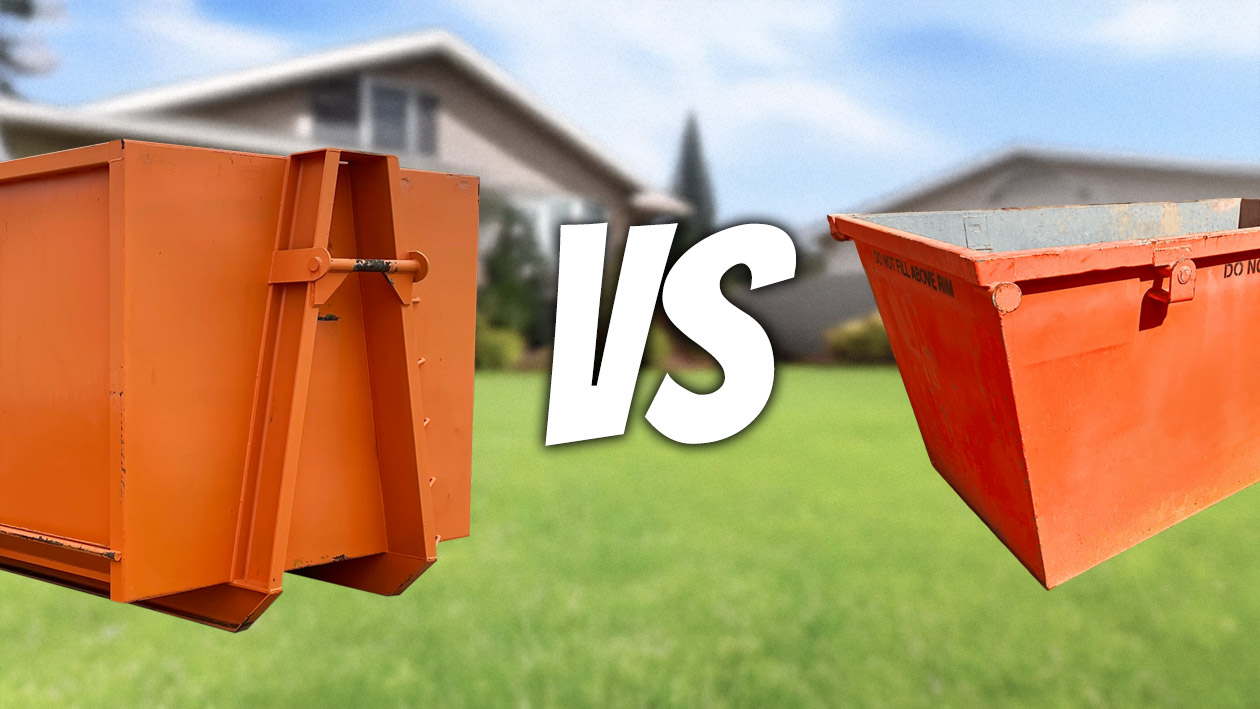
G’day, waste warriors! If you’re trying to sort out which bin is right for your project, you’ve come to the right place. Understanding the difference between hook bins and skip bins can save you time, money, and a fair bit of hassle.
The Basics: What Sets Them Apart
Hook bins and skip bins might seem similar at first glance, but they’re designed for different purposes. Your choice between them should depend on your specific waste management needs.
Hook Bins: The Heavy Lifters
Hook bins are the big blokes of the waste management world. They’re defined by how they’re loaded onto trucks, using a big hydraulic hook system that lifts and places the bin. These bins are typically rectangular with straight walls, unlike their sloped cousins.
If you’ve got a major project on your hands, hook bins might be your best mate. They range from 10m³ to 35m³ in capacity, making them perfect for commercial sites, manufacturing facilities, and industrial areas. Your construction debris, bulky materials, and non-compactable waste like wood, metal, bricks, and concrete will fit nicely in these large containers.
One of the standout features you’ll appreciate is the full-access door that completely opens at one end. This means you can walk right in to place heavy items or arrange materials for maximum space efficiency.
Skip Bins: The Versatile Option
Skip bins, on the other hand, are what most Aussies picture when thinking about waste removal. They’re typically smaller and more versatile than hook bins. The most common type you’ll encounter is the Marrel skip, which ranges from 2m³ to 15m³.
Your residential clean-up, small renovation, or garden overhaul would be well-served by a skip bin. They’re designed to fit in tighter spaces like your driveway, which makes them ideal for suburban homes. Skip bins usually have sloping walls with that distinctive trapezoidal shape you’ve probably seen around the neighbourhood.
Many skips come with smaller access doors, think wheelbarrow-sized ramps, rather than the full-door access of hook bins. This is usually enough for most household jobs, but something to consider if you’re shifting larger items.
Practical Considerations for Your Project
I’ve spent 30 years in the waste management industry, and one thing I’ve noticed is that people often underestimate the space needed for bin delivery. Your hook bin will require significant clearance, about 15 metres in length and 6 metres in height. The size of skip bins, especially Marrels, means they need much less room to manoeuvre, requiring only about 3 metres of clearance.
The loading mechanism is another important difference. Hook bins use a hydraulic system that slides and rolls the bin onto the truck, while skip bins typically use chains attached to hydraulic arms. This difference means hook bins can handle heavier loads without much hassle.
Which One’s Right for You?
For your average household clean-up, renovation, or commercial building project, a skip bin will likely do the job nicely. They’re more cost-effective and won’t take up your entire driveway.
Have any other questions about waste management for your project? Feel free to give us a call, we’d be happy to help.
We are proud to support:


